
Lost Cat: What to Do First
읽는 데 5분
이 가이드는 아직 한국어로 제공되지 않아 영어 버전을 보여 드립니다.
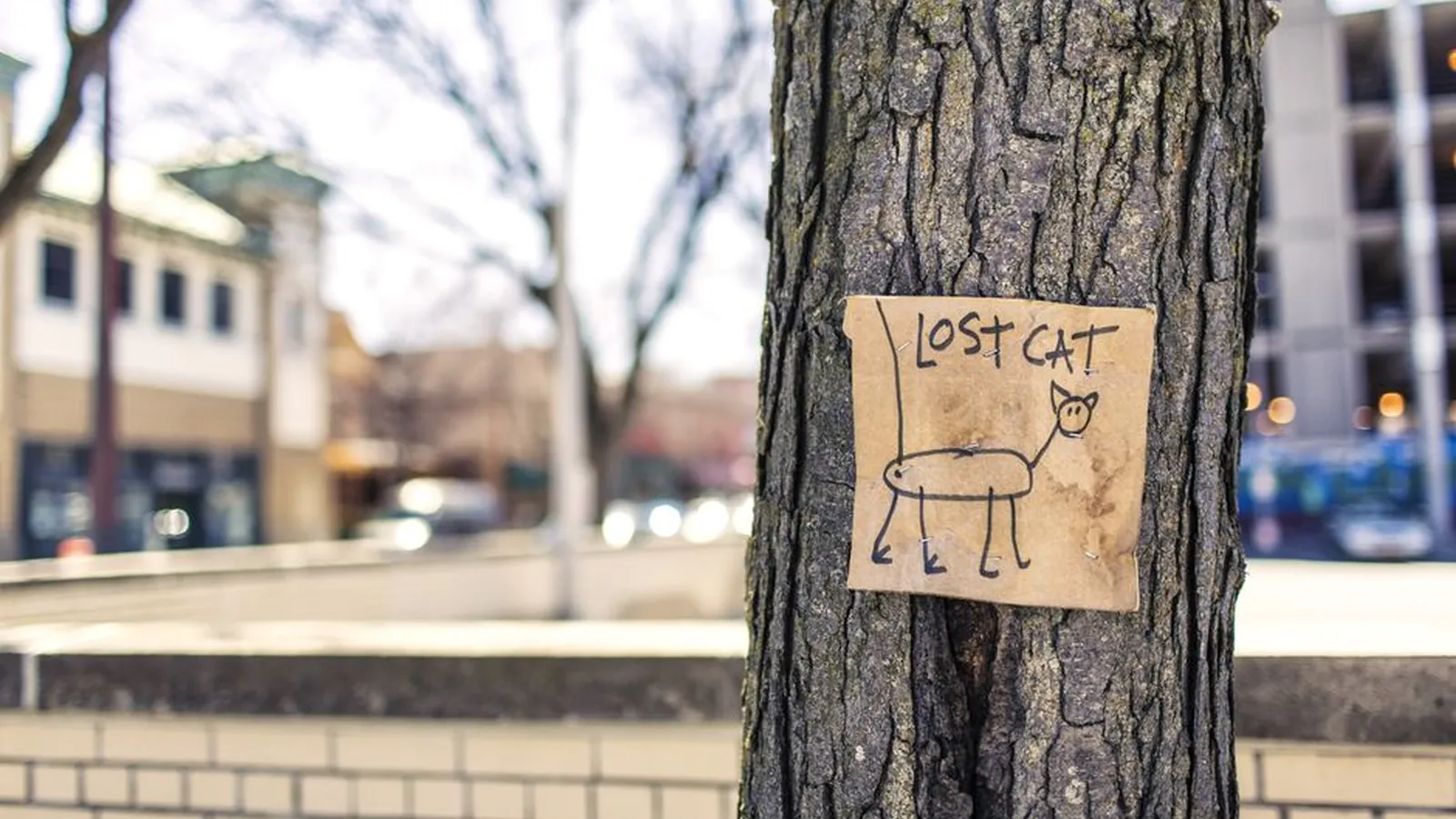
If your cat is missing, start close to home. Search every hiding spot in and around your house, report your cat to the microchip registry, then tell local shelters, vets and neighbours. This guide puts those steps in order and shows what to write down as you go. It belongs with our other lost pets and safety guides.
Try to stay calm. A list is easier to work through than a head full of worry, and it gives you something to do with your hands. Read it once now, then take it line by line. You don't have to do everything at once. Just keep going.
Where do I look first?
Look in your home, your garden and the streets right around them, because most cats are not far away. A 2017 study cited by Humane World for Animals found most missing cats are found less than a third of a mile from where they escaped, and indoor cats who get outside are usually found less than three houses away. The RSPCA puts it at 75% within 500m.
A frightened cat often stays quiet and may not answer when you call. It can take a few days before a hiding cat comes out. So check closely. Then check again.
| Where | What to check |
|---|---|
| Inside the house | Cupboards, boxes, under beds, behind furniture, inside appliances |
| Garden and outbuildings | Sheds, garages, under decks and porches, dense planting |
| Vehicles | Under and inside your car, and ask neighbours about theirs |
| Next door | Ask neighbours to look in sheds, garages and vehicles |
Then search at the right times. Cats are most active at dusk and dawn, and a scared cat often hides by day and comes out late at night. Walk slowly, call your cat's name, and pause long enough to give them time to answer. Shaking a treat pouch, putting out strong-smelling food, or leaving bedding, toys or used litter that smells like home can help bring a cat back, as the RSPCA suggests.
If your cat has not turned up after a first sweep, Humane World for Animals suggests leaving food and water in a sheltered spot near where you think your cat is hiding, and setting up a motion-activated camera to learn when your cat visits. That tells you the best time to come back and watch. Ask your local animal control or rescue group what else they can lend or advise on.
Who do I tell?
Tell your microchip registry first, then local shelters, animal control and vets. Don't wait until you've finished searching to make these calls.
- Call the microchip registry. Report your cat as missing and check your phone number and email address are current. If you don't know which registry holds the record, AAHA offers a free lookup tool that finds the registry from the chip number. In the UK, the RSPCA points to identi.pet. If you do not have the number, a vet or shelter can scan your cat and read it.
- Contact local shelters and animal control. File a lost report and leave a photo and description. Humane World for Animals notes some shelters hold lost cats for as little as 72 hours, so act quickly.
- Call nearby vets and rescue centres. Call before you visit, because some places only take in cats that are injured or unwell.
- Visit shelters in person, and keep going back. A lost cat can take weeks to arrive at one, so one call isn't enough.
- Call the police if you think your cat was stolen.
Many of these steps are the same as for a dog, so the first-hour checklist for a lost dog is a useful companion.
How do I spread the word?
Make it easy for neighbours and local groups to recognise your cat and reach you. Tell people who are out and about: dog walkers, mail carriers, joggers, delivery drivers and anyone who feeds outdoor cats. Delivery vehicles matter because cats can climb into a van without anyone noticing.
You can make a lost-pet poster in a minute. A good cat poster has:
- Clear photos from several angles
- Distinctive markings and anything that sets your cat apart
- Where and when your cat went missing
- Whether strangers should approach, and how your cat behaves around people
- Your contact details
Post the same photo and details in local community groups and lost-pet groups, and share it on your own accounts. Neighbours who know your cat is missing are also less likely to assume a cat in their garden is a stray.
Be careful with anyone who says they found your cat. Ask them to describe it and send a photo, and be wary of anyone who asks for money before returning your cat.
What should I write down?
Keep one running record. You'll never repeat a call or wonder what you already checked. It also helps everyone in the household work from the same facts.
| What | Note it down |
|---|---|
| Microchip | Chip number and the registry it is held with |
| Photos | Recent photos from several angles |
| Description | Colour, markings, collar or tag |
| Last seen | Time and exact place |
| Calls made | Who you contacted, when, and what they said |
| Places searched | Where you looked, and at what time of day |
| Sightings | Date, time, place and who reported it |
Keep track of it
The hard part is keeping the details together when everyone is tired and worried. Paw Crew is coming soon to iPhone, and it is built for exactly this kind of record: the lost-pet card keeps your pet's photo and details in one place, and household sharing through iCloud lets everyone in the home see the same information. You can read more about what Paw Crew does, and fill in the card before you ever need it.
Bottom line
Search close to home first, call the microchip registry early, then widen out to shelters, vets, neighbours and local groups. Write down every call and every place you look, and keep checking, because a lost cat can take weeks to turn up. If you have questions about your cat's care, ask your vet.
자주 묻는 질문
- How far does a lost cat usually go?
- Usually not far. A 2017 study cited by Humane World for Animals found most missing cats are found less than a third of a mile from where they escaped, and the RSPCA says 75% are found within 500m. Indoor cats that slip outside are often found within a few houses of home.
- Should I put food outside for a lost cat?
- The RSPCA suggests strong-smelling food and items that smell familiar, such as bedding, toys or used litter, to draw a cat back. Put them close to where your cat went missing and check them at dusk and dawn.
- How do I find which microchip registry my cat is on?
- Use a lookup tool with the chip number, such as AAHA's in the US or identi.pet in the UK. If you don't have the number, a vet or shelter can scan your cat and read it for you.
- How long should I keep looking?
- Keep going. Humane World for Animals notes that a lost cat can take weeks to arrive at a shelter, so repeat your calls and visits instead of checking once.
출처
Paw Crew는 수의학적 조언을 제공하지 않습니다. 반드시 수의사와 상담하세요.