
How to Tell If Your Cat Has Been Fed
5 minutters læsning
Denne guide findes endnu ikke på dit sprog, så her er den engelske version.
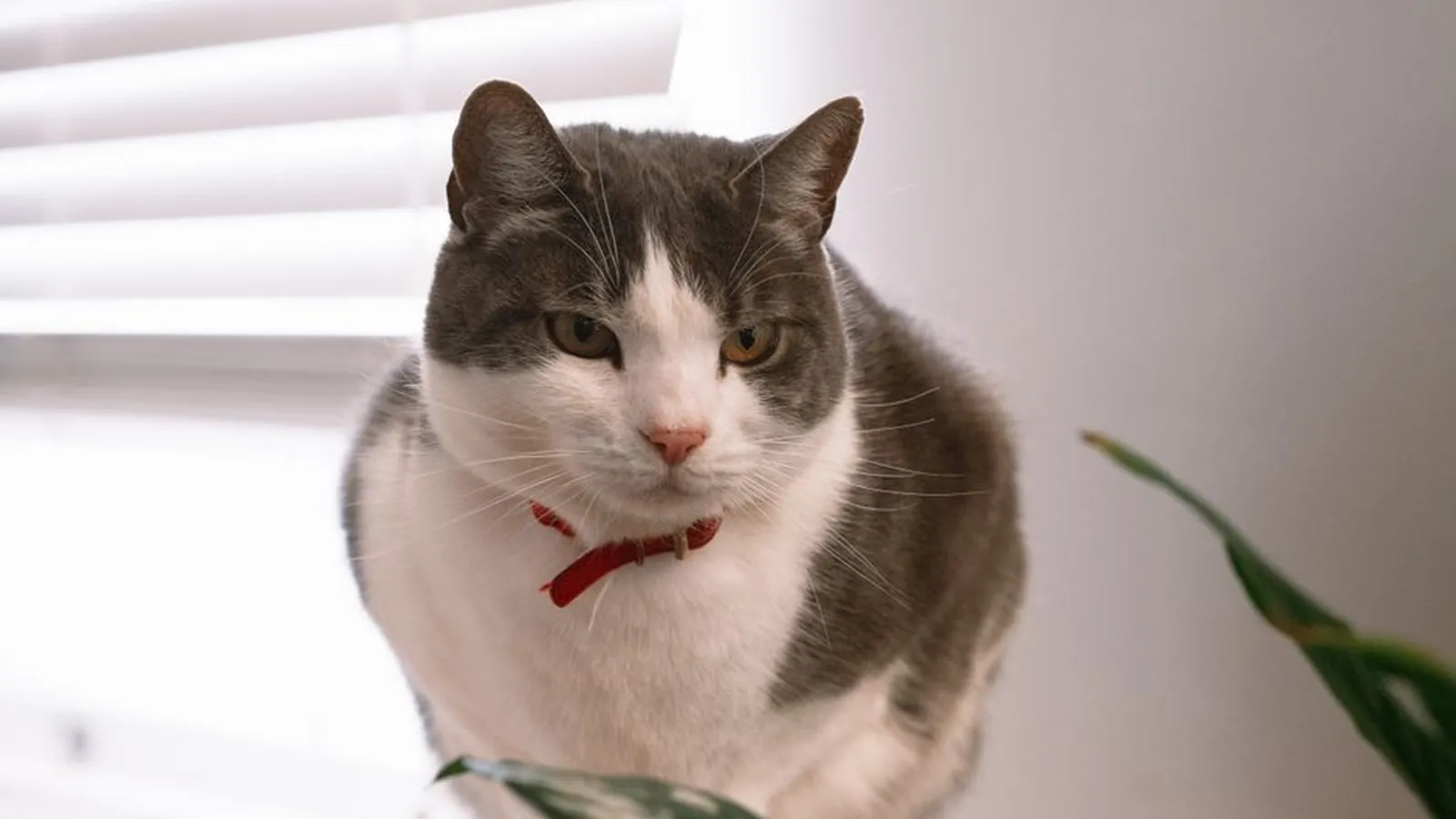
You walk into the kitchen, the cat is at the bowl, and you cannot remember whether anyone fed her. Maybe you did. Maybe your partner did before leaving. The simple answer to how to tell if your cat has been fed is this: do not rely on memory or on the look of the bowl. Record each meal when you give it, in one place the whole household can see.
This guide shows how to set that up, from scheduled meals to a shared log, and what to do when there is more than one cat. It is about keeping track of care. Anything about what or how much your cat should eat belongs to your vet.
Why is it so easy to miss or double a meal?
A full-looking bowl proves nothing, and an empty one proves little. A cat can be given a meal by one person, then be offered another by a second person who walked in ten minutes later. Or everyone assumes someone else did it and the meal never happens.
It gets harder when meals are not set. VCA Animal Hospitals points out that with scheduled meals, it is easy to see whether all the food from a meal was eaten. A bowl that is always out takes that away, because nobody can say what went in or when. Timing matters to the cat too: VCA explains that after 8 to 10 hours an empty stomach starts sending hunger signals, so a missed meal is noticed by her even if nobody else notices.
How do you set meal times and measured portions?
Pick set times, measure what goes in the bowl, and write the time down. Three small habits make the question answerable.
- Set times. VCA says the most common recommendation is at least two meals per day, and that some cats do better with three or four while others do fine on one. How many meals your cat has, and when, is a question for your vet. Once you have the answer, put those times on a schedule you can keep, like the one in our guide to pet meal times.
- Measured portions. VCA suggests using a measuring cup or a kitchen scale, so a meal is a known amount rather than a guess. Ask your vet what the amount should be, because equal volumes of different foods carry different calories.
- A note on treats. Treats and extras go in the record too, so a second helping does not slip by unseen. VCA says no more than 10% of a pet's daily calories should come from treats, snacks or people food.
If your cat grazes from a bowl that stays out, VCA's advice for one cat on her own is to measure out the day's portion and record any food left at the end of the day. That gives you a daily total even without set meals.
How do you keep one shared log?
Choose one spot, make it quick, and make it the first thing anyone does after feeding. The best record takes five seconds. A long form won't survive a busy week.
Here is what is worth writing down each time:
| What | Why it helps |
|---|---|
| Time of the meal | Shows at a glance that the morning meal is done |
| Who fed | Lets you ask the right person if something looks off |
| Amount given | Keeps meals the same and shows when a portion changed |
| Amount left | Shows whether the meal was finished |
| Treats and extras | Keeps the day's total honest |
You can use a sheet on the fridge, a shared note or a checklist on a phone. What matters is that everyone in the house looks at the same one. If several people share the jobs, our guide on how roommates split pet care fairly covers who does what, and the same idea applies to a litter box cleaning schedule and log: one record, marked when the job is done.
What changes in a multi-cat home, or when a sitter helps?
Give each cat her own bowl, and ideally her own spot. VCA says feeding measured amounts in separate bowls is the best way to ensure each pet is not over- or under-fed. It also gives a second reason: with one shared bowl, it could be days or weeks before an owner realises a pet is eating less than usual. Separate bowls make each cat's meals easy to see.
VCA also describes timed feeders that release set portions, and models designed to read a pet's microchip and release food only when that pet is nearby. If you try one, the log still matters, because the feeder cannot tell you what you added by hand.
When a sitter or a friend steps in, hand over the routine and the log together: the times, the amounts your vet set, and where to mark each meal. Our guide to sharing your pet's routine with a sitter lists what to include.
What can leftovers tell you?
That something changed, which is worth noting and passing on. VCA says that if food is left, whether all or part of a meal, it is an important signal that something is wrong and it is time to schedule a veterinary appointment. It also says a break in eating habits can be a warning sign of illness.
You don't need to work out why. Your job is to write down what you saw: the day, the meal, how much was left. Bring that record to the vet. A few days of clear entries are far more useful than "she hasn't been eating much, I think."
How can you keep it going?
Make marking the meal part of feeding, not a chore afterwards. Put the log where the food is kept, and agree as a household that a meal does not count until it is marked. After a week it becomes automatic.
Paw Crew is built for this kind of routine, and it's coming soon to iPhone. The Day Ledger shows what has been logged for each pet, the Now line shows what is next, and a quick log takes a couple of taps. Reminders can be marked done, and household sharing lets everyone in the home see the same record, so the answer to "has she been fed?" is a glance at your phone. It logs and reminds. Anything about what your cat should eat stays with your vet.
Bottom line
You cannot tell from the bowl alone whether a cat has been fed. Set meal times, measure portions, give each cat her own bowl and write every meal down in one shared place. Take what you recorded to your vet whenever you notice a change in eating.
Spørgsmål
- How many times a day should a cat be fed?
- VCA Animal Hospitals says the most common recommendation is at least two meals a day, and that some cats do better with three or four while others do fine on one. Your vet sets the plan for your cat.
- How can I tell if someone else already fed the cat?
- Make the record the habit. Whoever feeds the cat marks the meal straight away in a shared log, a note on the fridge or a checklist on a phone, so nobody has to guess or ask around.
- What if my cat leaves food in the bowl?
- Write down how much is left. VCA says that when food is left, whether all or part of a meal, it is a signal to schedule a veterinary appointment. Show your vet what you logged.
- Does a shared bowl make it harder to keep track?
- Yes. VCA notes that with a shared bowl it could be days or weeks before an owner realises a pet is eating less than usual. Separate bowls make each cat's meals visible.
Kilder
Paw Crew giver ikke dyrlægefaglig rådgivning. Spørg altid din dyrlæge.