# Senior Pet Care Checklist: What to Do and Keep Track Of
게시 2026년 10월 31일. 업데이트 2026년 10월 31일. 작성: Kallos Labs LLC. 정식 URL: https://pawcrew.app/ko/guides/senior-pets/senior-pet-care-checklist
> A senior pet care checklist is a short list: a vet visit about every six months, a comfortable home, a diet review with your vet and a written record between visits. Your vet decides anything medical.
A senior pet care checklist is short. It covers a vet visit about every six months, a home that is easy to move around in, a diet review with your vet and a written record of what you notice in between. This guide pulls those points together from VCA Animal Hospitals, the AVMA and AAHA so a whole household can share them. You'll find more in our [senior pet guides](https://pawcrew.app/ko/guides/senior-pets).
Nothing here replaces your vet. Anything about your pet's health, food, joints or medicines is a question for them. This is a list for organising everyday care and keeping a record.
## When is a pet a senior?
It depends on the species and, for dogs, on size. [VCA](https://vcahospitals.com/resources/senior/when-is-your-pet-considered-a-senior) groups dogs by weight, and heavier dogs reach their senior years earlier:
| Pet | Roughly senior from |
|---|---|
| Small dog (20 lbs or less) | 9 to 11 years |
| Medium dog (21 to 50 lbs) | 7 to 9 years |
| Large dog (51 to 100 lbs) | 6 to 7 years |
| Giant dog (over 100 lbs) | 4 to 5 years |
| Cat, any size | 9 to 11 years |
Sources don't agree exactly. [AAHA](https://www.aaha.org/resources/supporting-your-senior-pet-veterinary-care-recommendations/) treats dogs older than 7 and cats older than 10 as seniors. Use these numbers as a prompt to start the checklist, and ask your vet which one fits your pet.
VCA notes that many pets hide discomfort, so owners usually go by age rather than waiting for something to look different. A longer nap or a shorter play session is easy to miss, and gray fur hides in many coat colors.
## What goes on a senior pet care checklist?
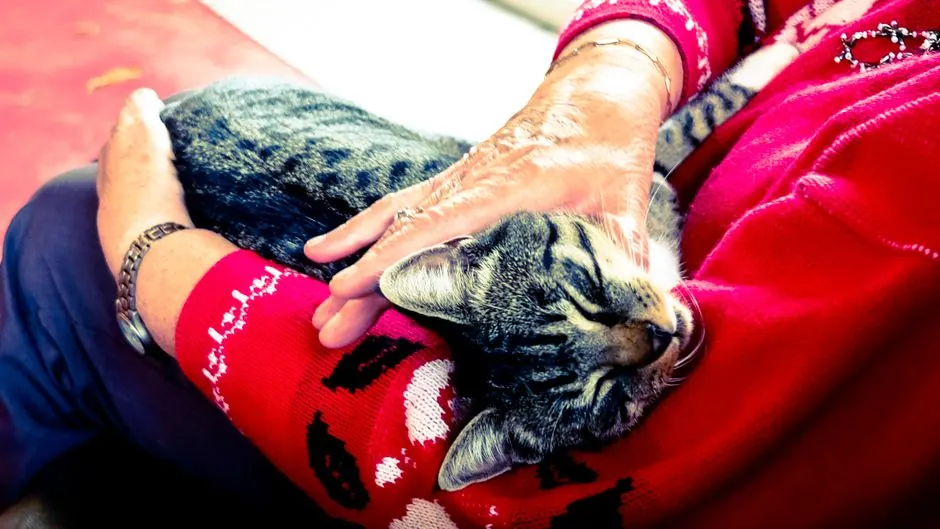
Photo by Matthias Zomer on Pexels
Most items are conversations with your vet and small changes at home. Here is the list, with where each point comes from.
| Job | What the source says | Source |
|---|---|---|
| Vet wellness visit | About every six months, instead of yearly | VCA |
| Vet wellness visit | Twice a year or more | [AVMA](https://www.avma.org/resources-tools/pet-owners/petcare/senior-pets) |
| Vet wellness visit | Every six months, even if your pet looks healthy | AAHA |
| Routine testing | Often done alongside the yearly exam; your vet may suggest more often | [VCA](https://vcahospitals.com/know-your-pet/wellness-testing-for-senior-dogs) |
| Joint check | Dogs and cats should both be screened for arthritis so a plan can be discussed | VCA |
| Diet review | Ask your vet whether a senior formula suits your pet | VCA |
| Exercise | Keep it regular, and watch for tiredness on walks or in play | VCA |
| Bedding | Soft, cushioned bedding | VCA |
| Floors | Carpets or rugs on slippery floors | VCA |
| Litter box | Put it where cats don't need to climb stairs or step over things | VCA |
| Mind | New toys and tricks | VCA |
Two notes on that list. First, visit frequency is where the sources overlap: [VCA](https://vcahospitals.com/resources/senior/when-is-your-pet-considered-a-senior) says every 6 months, the [AVMA](https://www.avma.org/resources-tools/pet-owners/petcare/senior-pets) says twice a year or more, and [AAHA](https://www.aaha.org/resources/supporting-your-senior-pet-veterinary-care-recommendations/) says every 6 months for dogs older than 7 and cats older than 10. How often your own pet needs tests, and which ones, is up to your vet. VCA says dogs are very good at hiding illness and disease, which is why regular checks are the point. Second, nothing in the table is a dose, an amount or a treatment. If your vet adds one, write it down exactly as they gave it.
## How do I use the checklist?
Start by putting the next vet visit in the calendar. Everything else can wait a week. The visit is what the rest hangs on. If you're not sure what to bring, our list of [what to bring to a vet visit](https://pawcrew.app/ko/guides/vet-visits/first-vet-visit-checklist) works for any appointment, not just the first.
Next, walk through your home the way your pet does. Look at the floors they cross, the places they sleep, the route to the litter box or the back door. VCA's suggestions are plain ones: cushioned bedding, rugs where the floor is slippery, a litter box that is easy to reach. Make one change at a time, and note whether your pet actually uses it.
Then share the jobs out. In a shared home it helps to give each item an owner. One person books the vet, another handles the evening walk, and everyone writes down what they notice. Nobody assumes someone else spotted it, and your vet gets one clear picture instead of three half ones.
Finally, keep exercise steady. VCA says regular exercise helps keep joints flexible and muscles strong, and suggests watching for tiredness, such as lagging behind on walks or losing interest in games. If that changes, tell your vet.
## What should I log between visits?
A checklist says what to do. A log shows what happened, which is what makes a vet visit useful. A short list is plenty:
- Vet visits, the date and what your vet said
- Weight, if your vet asks you to track it
- Any change to food, only as your vet advised
- How your pet moves: stairs, jumping, slippery floors, getting up
- Appetite, energy and sleep changes, in plain words and with dates
- Medicine courses, exactly as your vet set them
- Vaccination dates (see [keeping track of vaccinations](https://pawcrew.app/ko/guides/preventives/track-pet-vaccinations))
Write what you saw and leave the explaining to your vet. "Didn't jump onto the sofa on Tuesday or Wednesday" is more useful than a guess about why. A dated list of Observations also makes it easier to answer the question every vet asks, which is "when did you first notice that?"
If something worries you, don't wait for the next scheduled visit. Call your vet.
## How do I keep track of it?
Paw Crew is an iPhone app, coming soon, built for this kind of routine. You add your pet, log a job in one tap and see the day in the Day Ledger. [Reminders that mark done](https://pawcrew.app/ko/reminders) can nudge you before a vet visit or on the days a course runs, and [household sharing](https://pawcrew.app/ko/household-sharing) through iCloud lets everyone at home see what has been done. Your records stay on your iPhone and in your own iCloud, and Paw Crew is free for one pet. It logs and reminds. It doesn't give care advice.
## Bottom line
Senior care comes down to regular vet visits, a comfortable home and a written record. Take the timings from your vet first and the general guides second, and write things down so each visit starts from facts instead of memory.
## 질문
### How often should a senior pet see the vet?
VCA suggests wellness visits about every six months, the AVMA says twice a year or more, and AAHA says every six months even when a pet looks healthy. Your vet sets the schedule for your pet.
### At what age is a dog or cat a senior?
VCA puts small dogs at about 9 to 11 years, giant dogs at about 4 to 5, and cats at about 9 to 11. AAHA uses over 7 for dogs and over 10 for cats. Ask your vet which applies to your pet.
### Do senior pets need different food?
VCA suggests reviewing the diet with your vet to see whether a senior formula suits your pet. Don't change food on your own; write down what your vet tells you.
### What can I do at home to make an older pet comfortable?
VCA lists soft cushioned bedding, rugs on slippery floors, litter boxes that are easy to reach and new toys or tricks to keep the mind busy.
## 출처
- [VCA Animal Hospitals: When is Your Dog or Cat Considered a Senior?](https://vcahospitals.com/resources/senior/when-is-your-pet-considered-a-senior)
- [VCA Animal Hospitals: Wellness Testing for Senior Dogs](https://vcahospitals.com/know-your-pet/wellness-testing-for-senior-dogs)
- [AVMA: Caring for senior cats and dogs](https://www.avma.org/resources-tools/pet-owners/petcare/senior-pets)
- [AAHA: Supporting Your Senior Pet, Veterinary Care Recommendations](https://www.aaha.org/resources/supporting-your-senior-pet-veterinary-care-recommendations/)
Paw Crew는 수의학적 조언을 제공하지 않습니다. 반드시 수의사와 상담하세요.